Friday, August 19, 2011

The Hunt for Mr. Stripy- The Banded Sunfish


We were contacted by one of our fans, Ken Potter of Portsmouth; he wanted to fish with us for his birthday present. Imagine that...we're someone's birthday present! Well Happy Birthday Ken!

Ken really wanted to be deputized into the quest so it was decided that we would hunt for the banded sunfish. After some research and discussions with NH Fish and Game we narrowed the fishing spots down to a few bodies of water in the seacoast region.


Before heading out we met with Peter Tilton, owner of the Defiant Lobster company, which not only sells lobster and clams but is an excellent bait shop. Peter recommended we fish the Hampton Ice Pond. His advice, fish in the weeds, small hooks and watch out for the little horned pout!


So that's what we did! The pond was absolutely beautiful!
Ken fishing in the weeds


The fishing was terrific
Ken and his pumpkinseed


Ken and Bluegill

The Golden Shiners here were huge

Brown Bullheads attacking mid-day!

we must've caught 30 of these little bullheads

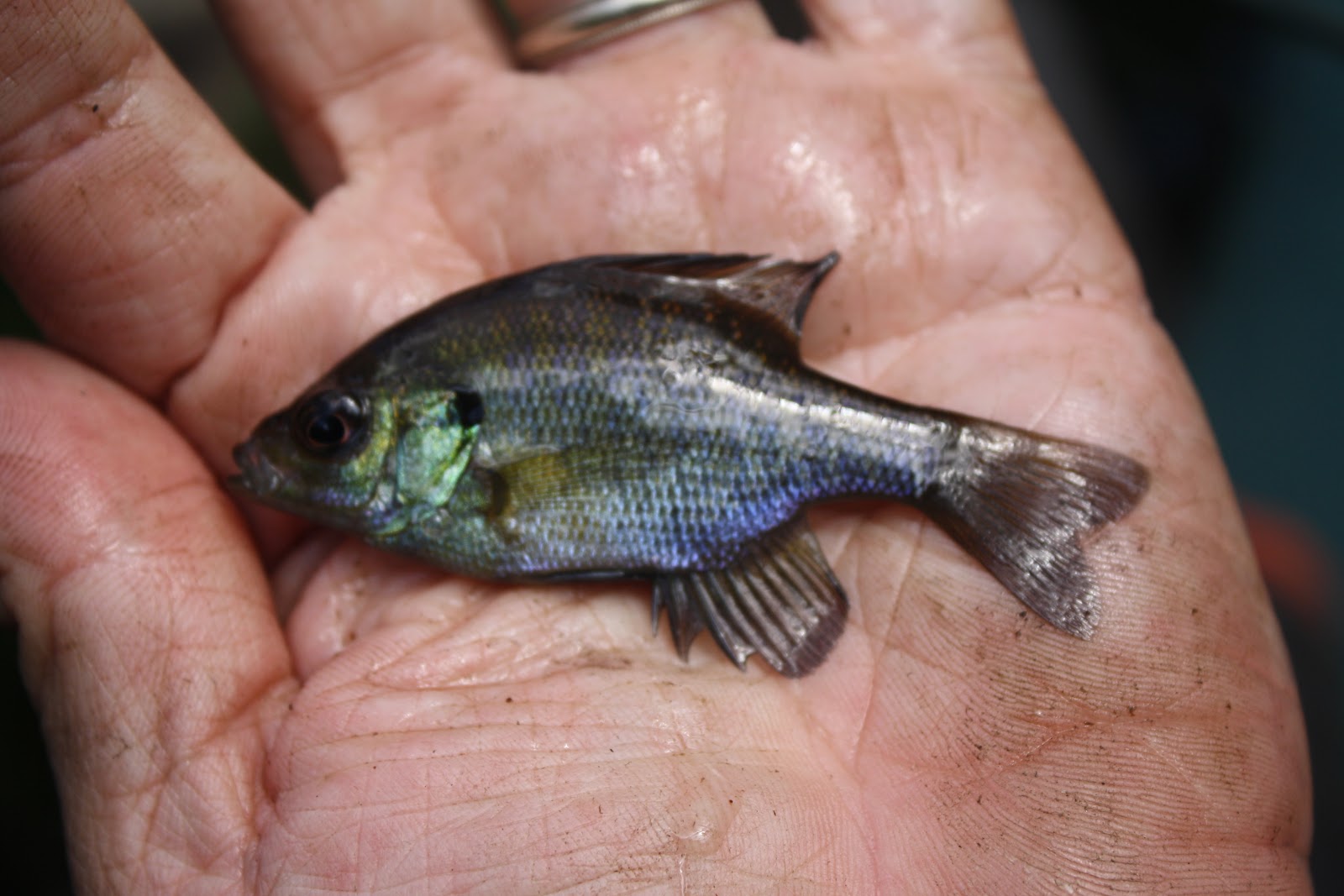
We thought we had stripy here but the forked tail is a give away!


Ken spent a good deal of the day unhooking little cats

Little Bluegill

We caught dozens of fish.

But Mr. Stripy eluded us, if you've caught a banded sunfish, drop us a line and let us know what you did. But we haven't given up. Mr. Stripy you will be ours, oh yes you will!


Emergency Essentials/BePrepared

Tuesday, August 16, 2011

Old Man Groves of the Sea: Fish #30 Lake Trout


We were invited by Salmon Patrol Charters to go for fish number 30, the Lake Trout.
This would be our first time having an actual fishing guide take us out. And it was awesome!

Clay's dad, Bob Groves, came for the adventure and was deputized into the quest.

We met Jay and Gary at 4:45 am in Gilford on  lake Winnipesaukee and came with enough coffee to get us through the morning.After a brief introduction we set out.


By 5:15 we had our first fish, we let the old man try to land it, he is used to fishing for king salmon with no barbs on the hooks, so he reeled as fast as he could and quickly lost the fish. Clay tried his luck with the next fish and lost that too. We were starting to feel like amateurs!


An hour later, after losing 3 more fish, we landed our first fish of the day, a land locked Atlantic Salmon. Since we've already eaten this species it was quickly released.
This Salmon had a serious speech impediment

Jay and Old Man Groves with their Rainbow

Old man Groves had another fish on and it wasn't a Salmon, we were getting excited! But bummer it was an 18inch rainbow trout, what a disappointment!


8:15 we finally got into the Lakers, now in NH they need to be 18inches long to keep them, so we caught about 8 of them before Old man Groves caught the keeper and got deputized into our quest.
The Quest fish with his new friend

These fish are eating machines


A big thank you to Salmon Patrol Charters (NH Guide Services) for taking us out, these guys are terrific and know a lot about how to have a good time while fishing. We highly recommend them if you are looking for a guide.

Saturday, August 13, 2011

Show some Love!


OK Fans of CMA, we're working hard on our quest to catch and eat every kind of freshwater fish in NH, but we need some love!


How can you show your love for our project? Good question.
Here are the easy ways. Do you see that little Facebook box on the right of your screen? You do? Great click the little box that says "Like" As we approach publishers, the more followers we have the better!


We write and write and write and share loads of pictures and stories, if you enjoy a picture or story or something strikes you, leave us a comment, let us know you're out there. If you haven't read our published stories check them out on our home site http://www.catch-m-all.com/

Another great way to support our quest is to tell your friends about us, we need as many people as possible to be following this adventure. This will help us get a book deal (our real goal) and some advertisers.


Speaking of advertisers, if you or someone you know wants to advertise on our websites have them contact us and we'll make a good deal. We can barter for ad space, like Salmon Patrol Charters did, or we could take some money. Hey, we've got mortgages to pay and kids to feed!


Anyway, let us know your out there and share some love with your old friends Dave and Clay!

Thursday, August 11, 2011

Pays to Know a Biologist: #29 Spottail Shiner


 While fishing in the Connecticutt River in Colbrook we hooked an interesting little minnow that was feeding in and around the rocks. We caught it on a small piece of worm intended for a round whitefish. This little guy had seen better days since half of his tail was nearly gone. 

Even with his injury, this fish could swim around and find food. 
We knew it was a minnow, but what species?  We tried to use a key to identify it but we thought maybe it was a creek chub or some kind of dace.  

At 3.5 inches this fish ranks close to the smallest fish we ever  caught. 
We knew we were way out of our league when it comes to identifying minnows, so we emailed the pictures to Matt Carpenter and Ben Nugent, the nongame fisheries biologists at NH Fish and Game.  We soon heard back that we had caught a spottail shiner (Notropis hudsonius)! It was like having a winning lotto ticket because that was a new fish for us.  We then sent another set of mystery fish pictures to the guys and heard back that it was a young fallfish - win some you lose some. 

The number of rays in a fish's dorsal fin is usually a distinguishing factor that leads to  identification. Sopttails have eight. rays.  
The key to identifying a spottail shiner is a combination of features and habitat. In a healthy specimen the dark spot on the tail is a sure giveaway, but ours was a bit beat up and so other features became important for identification  According to Ohio DNR webpage, " The dorsal fin is set rather far forward compared with most other shiners and is closer to the head than the tail. The rear edge of the dorsal and anal fins is concave and there are 8 rays in the anal fin. The mouth is slightly sub-terminal (ending below tip of snout) and the snout protrudes beyond the upper jaw. "
The mouth is slightly below the snout. 
We also bet that Ben and Matt had surveyed that section of the river and probably ran into many of these fish while netting or electoshocking.  The Connecticut River is cold and clear in Colebrook, supporting a rather narrowly defined assemblage of fish species. Also after catching and identifying thousands of fish, biologists often just know by looking at a fish what it is.

A good amount of the tail was gone, but enough to identify it. 
Big thanks to NH Fish and Game for the help. We accept whatever they say when it comes to fish identification.

A rather distinct head shape once you know what to look for. 
We are now 19 away from catching the 48 freshwater fish in New Hampshire listed at the NH Fish and Game website.  It is time to write the book about our adventures which will be a combination of our newspaper stories and detailed accounts. We are looking for a publisher, so let us know if you know one. 


Wednesday, August 10, 2011

Sponsor #1

We wanted to take a minute and give a great big Thank You to our first sponsor, NH Guide Services.

Photobucket
Jason and his brother Gary from Salmon Patrol Charters took us out for fish number 30
stay tuned for details.
We had a great time and caught a ton of fish, if you're looking for a fishing guide please check these guys out first. We appreciate any support we can get as we catch and eat every species of fish in NH!

Monday, August 8, 2011

Venomous Fish! #28 Margined Madtom


The quest went to the Merrimack River in search of carp, walleye, and any other fish that were still missing. We were fishing at one of our favorite spots on the river, the Amoskeag Fishways.
Water is low at the Amoskeag Dam and Fishway in the summer on the Merrimack River

As night fell some fishermen were catching walleye up near the fish ladder, which is totally illegal but looked fun.

Not to be dejected we searched the rocks for one of our favorite weird fish in New Hampshire, the margined madtom. These little catfish are only 6 inches long and have sharp spines that deliver a mild venom.
He can fit in the palm of your hand, but watch out.
We have been stung by these fish and we would liken the feeling to a bee sting.  When we caught this one on a small bit of worm and tiny hook it flipped wildly. We think that fast flipping is intended to stab predators trying to hold them. A spine in the cheek of a mink would be painful!

The venomous spines are on the top and both sides (pectoral fins)
Ours was a monstrous, 4 inches.

Besides the longer body, we could tell this was not a tadpole madtom by the black margins on the tail and anal fin. 
To subdue the little catfish for pictures we put it in the freezer. Hopefully it was a fairly humane way to be killed for the cold blooded animal. It only took a few minutes.   We would have used a knife, but the fish is so small it is difficult to sever the brain stem without destroying the head.

Catfish in a freezer bag.  

A good safe way to get a good look at these fish is in a freezer bag. 

The margined madtom is really a handsome fish. Very clean, smooth skin.


 We are not sure how we are going to prepare this fish for the table, but we do want to do some research on the venom. It would be a shame to die during the quest because we ate a poisonous madtom (sounds like a segment on "1000 Ways to Die"). We hope we can carve out the poison glands like the Japanese chefs do for the deadly puffer fish.

 If you don't hear from us again, you know what happened.


Thursday, August 4, 2011

Bully! #27 Yellow Bullhead

It was Friday night and the urge to catch a quest fish overwhelmed all else.  Looking at the diminishing list of fish left to catch, the yellow bullhead popped out as likely success story on this full moon evening.

Yellow bullhead are well known night feeders and one of two bullhead species in the state (the other is Brown).  We jumped on the internet and began searching for the right habitat; weedy warm-water lake that had a place to fish from shore. A bridge that crossed Pow Wow Pond in Kingston fit that bill.  Some quick digging in the compost heap got us a bag full of worms and we were off.

Bridges are nice places to fish because the fish usually travel back and forth underneath and access can be really easy. This spot is just about perfect for night bullhead fishing because it has a boat launch nearby and a street light overhead.

A simple rig consisting of a #6 hook and split shot weight was all that was needed. The hook was threaded with 4 earthworms, creating an irresistible ball of squirming goodness.

While we waited we befriended a spider that lived in the guard rail. She was spinning her web to catch one of the many flying insects that were attracted to the street light .


After about 20 minutes we got the telltale tapping on the line. As the lined tightened, the hook set firmly into fish. The wiggling fight suggested bullhead right away, but yellow or brown?  The four pound line demanded a somewhat cautious fight, but soon the 1/2 pound bullhead was being hoisted up through the night air.  The yellow sides and more importantly the yellow chin whiskers indicated that another fish was added to the quest.
He fit into a small cooler, but was he a yellow or brown bullhead

As soon as we saw the yellow whiskers, we knew we had fish number  27!
In most places the term bullhead is used for these fish, but in the Northeast they are called hornpout, presumably from their resemblance to the ocean pout.
Happy to have a hornpout
The eyes of a bullhead are really small because they do not need them. They rely on a terrific sense of smell and taste. All over the body or a bullhead are taste buds, so anything they touch, they taste.


This fish had some small lesions  on its skin. 

All of the catfish in New Hampshire have eight highly sensitive feelers: two above the mouth, two along the sides, and four on the chin.
The last thing a worm sees
Once the bullhead has been killed with a sharp knife to the brain it is time to clean it.  Catfish do not have scales and only tough skin that needs to be pulled off of the fish.  The best way to do this is to get a board and drive a large nail through it's head.  Next to big rivers in the Midwest you can see big catfish cleaning trees with many large mummified heads nailed to the trunk.

The catfish is not going anywhere.

Once the skin is sliced from the head, a pair of pliers is used to grip the skin and pull it off of the fish. 
A pretty easy process that keeps nearly all the meat intact.